

Imagine you are lying in a hospital bed, waiting.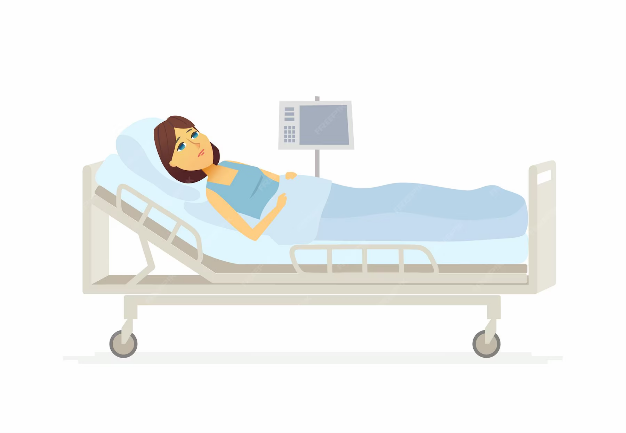
You have no idea when the doctor will come. Your phone has run out of battery. There are no books, magazines, or even a TV remote within reach. You can hear people chatting in the corridor, but no one comes in. You can’t get up, and there’s nothing to do but stare at the ceiling.
How would you feel?
Probably frustrated. Bored. Restless.
Your mind might wander to negative thoughts: Why is no one helping? What’s happening next? How long will I be here?
In that moment, doing nothing isn’t relaxing, it’s stressful, disempowering, and emotionally draining.
This is the daily reality for many people with learning disabilities or autism when meaningful engagement isn’t intentionally built into their support. Active Support exists to change that.
What is Active Support?
Active Support is:
“A model of care that aims to improve the quality of life of individuals with intellectual disabilities by maximising their engagement in meaningful activities of daily life with appropriate support from staff” (Totiska et al, 2018).
Its key principles are:
- Every moment has potential
- Little and often
- Graded assistance
- Maximising choice and control.
A Brief History of Active Support
Active Support has a rich history shaped by major developments in disability rights and social care within the UK:
- Late 1960s–1970s Normalization/ Social Role Valorisation: The Scandinavian Normalization movement (Nirje, Bank‑Mikkelsen, Wolfensberger) promoted services that reflected ordinary life i.e. the same rhythms, routines, and opportunities experienced by everyone.
- 1970s–1980s Closure of Long‑Stay Hospitals: As institutions closed, people moved into community‑based settings. However, many still experienced inactivity, boredom, and disengagement.
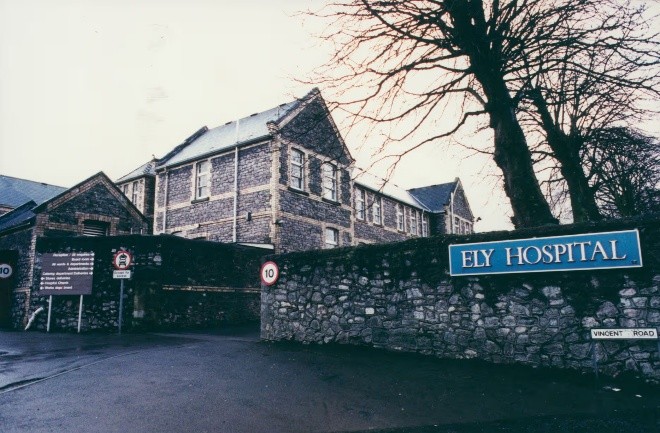
Picture shows Ely Hospital a long‑stay psychiatric institution closed in 1996.
- 1980s “An Ordinary Life” (King’s Fund): This influential UK report further shaped social care policy and reinforced the idea that people with learning disabilities should live full, ordinary, valued lives.
- 1980s–2000s Development of Active Support: Mansell and Felce translated these values into a practical staff model that provided guidance on how to support people, every day, in every moment, to truly experience inclusion, engagement, and independence.
Evidence Base
The strongest evidence for Active Support comes from the systematic review and meta‑analysis by Totsika et al. (2018), which analysed decades of research.
Key findings include:
- Active Support increases meaningful engagement
- Staff assistance and quality of support improve
- Behaviours of concern do not increase and in many cases they slightly reduce
- Full training and coaching are essential for effective implementation
- Higher engagement is linked to better quality of life
Active Support at Embrace Care
Pilot project CQC Services
We decided to implement the Active Support model in two of our CQC‑registered services.
Why?
We collected baseline engagement data using 30‑minute activity logs, which is a simple but powerful tool developed by Natalie Savage‑Evans (Rainbow Therapies).
The data showed:
- Pockets of high disengagement during certain times in the day
- Long periods of time with no meaningful activity
- Limited opportunities for skill development
What we did:
- Active Support Training – We covered the key principles of Active Support, the hotel vs home model of support, Prompting & Prompt Fading, Task Analysis Practice, and how to embed Active Support into daily practice for the individuals supported.
- Interactive Training: After the initial training session, the PBS Lead spent time working directly with the team in the home. This involved completing interactive trainingg. observing staff supporting individuals during real activities and offering immediate, constructive feedback.
- Task analysis in Practice: We also introduced Task Analysis as a practical tool to support independence. This involved breaking everyday activities (such as preparing breakfast) into small, achievable steps.
- PBS Plan Review: The team reviewed and updated the PBS Plan. This helped us create strategies to increase engagement safely, reduce distress and support individuals at their own pace.
Outcomes:
- Increase in meaningful activity: Both services have seen an increase in engagement from small tasks such as wiping tables and cleaning windows to taking part in preparing breakfast and washing dishes.
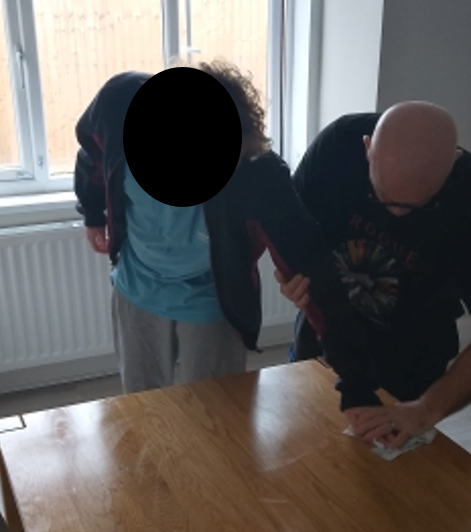
Kev (aka Mr Active Support) demonstrating hand-over-hand prompting with one of the individuals supported.
- Increase in choice & control: The Teams are now offering structured, predictable opportunities for engagement that move at the individual’s pace, aligned to their sensory and emotional needs and follow the PBS plans strategies to avoid distress.

One of the supported adults helping to clean her windows; she enjoys having a tidy and organised space.
- Increase independence: Through graded assistance, staff are providing just the right level of support to ensure success without taking over. This is helping people build confidence and new skills.
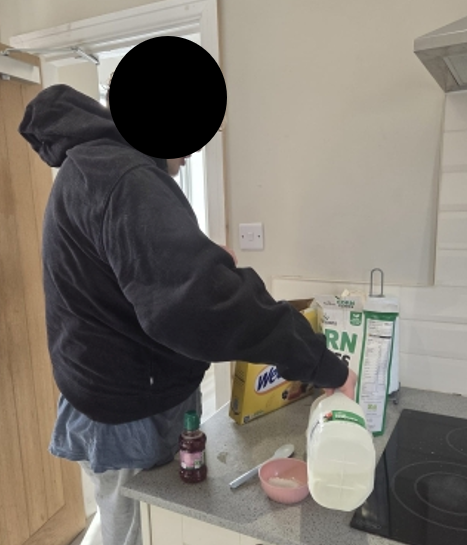

One of our supported individuals helping to wash his dishes and make his own breakfast.
Next steps:
This is just the start of our Active Support journey in these homes. We are excited to see how the model continues to develop as the team grows in confidence and skill, and as Active Support becomes fully embedded in their everyday practice. Watch this space!
Consent for the use of all photographs has been provided in line with the Mental Capacity Act (MCA) Best Interests process.
Written by: Robbie Ogden-Pyle (PBS Lead, UK BA Cert)
Date: 10.3.2026