

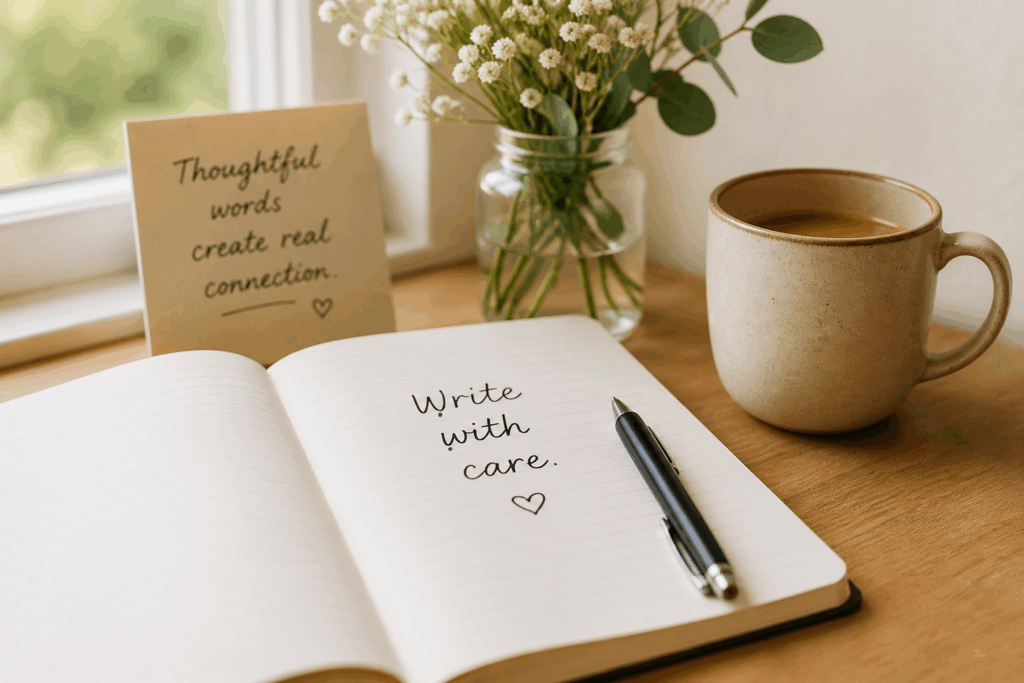
In the care industry, word carries significant weight. Every daily log, incident report, observation and handover becomes part of a person’s story. These records may one day be read by professionals, regulators, families or most importantly, by the individual themselves.
Because of this, how we write matters just as much as what we write.
As Therapeutic Specialist at Embrace Care, I often speak with the teams about the importance of Writing With Care. Documentation is not simply a requirement for safeguarding, or regulation, it is also a reflection of the values and approach we hold as teams supporting children, young people and adults who may have experienced trauma, loss, instability or complex life experiences.
Our language should reflect understanding, empathy and professionalism.
Why Our Words Matter
Many of the individuals we support have experienced significant challenges in their lives. Their records may already contain many difficult chapters, reports about crisis moments, incidents or professional concerns.
When we write about people, we have an opportunity to ensure their story is not defined solely by their most challenging moments.
A well-written observation can highlight resilience, effort, progress and strengths. It can capture context and understanding rather than simply describing behaviour in isolation. For example, there is a difference between writing: “X refused to engage and became difficult” and “X appeared overwhelmed and withdrew from interaction, [Team Member] offered reassurance and space, and continued to check in to ensure they felt supported”.
Both describe the same situation, but the second recognises the person’s emotional experience and the supportive role of the team. This is what therapeutic language looks like in practice.
Documentation as Part of Therapeutic Care
At Embrace Care, we aim to deliver care that is trauma-informed, person-centred and relationship-based. Writing should reflect this approach.
When the team write observations or incident reports, they are not simply recording events. They are documenting the environment around the person, their emotions, triggers, support needs and progress.
Good documentation can help us understand patterns over time, identify early signs of distress and ensure consistency across the team. It also allows professionals to see the positive relationships being built within the home.
Writing With Care helps ensure that behaviour is not viewed without context. Instead, it acknowledges that behaviour often communications underlying feelings such as anxiety, fear, overwhelm or frustration.
Remembering the Future Reader
One of the most important principles I encourage the teams to think about is:
‘Would I feel comfortable if the person read this about themselves in the future?’
People have the right to access their records. What we write today may shape how someone understands their experiences tomorrow. Language that labels or judges can unintentionally reinforce negative perceptions. In contrast, thoughtful and respectful documentation can help individuals see that even in difficult moments, they were supported by professionals who cared and tried to understand them.
Capturing Progress and Strengths
Another important part of Writing With Care is ensuring we also record positive moments. Progress in residential care is often gradual and can sometimes be easy to overlook. A person choosing to engage in conversation, managing frustration more safely, participating in activities or asking for help are all significant steps forward.
Recording these moments helps build a more balanced narrative of a person’s journey. It also supports the team’s morale, reminding teams of the meaningful impact they are having through their care and relationships.
Embedding This Approach Across Embrace
Due to the importance of language in shaping how individuals are understood and supported, we, the Embrace Care Therapeutic Team have developed bespoke “Writing With Care” training for teams across the organisation. This training is delivered to ensure that all team members feel confident in using therapeutic, respectful and person-centred language within their documentation. It supports the team to reflect on the impact of their words, understand how language can influence professional interpretation and ensure that records accurately capture both the challenges and the progress individuals make.
By embedding this approach across Embrace Care, we aim to ensure that the written records reflect the same compassion, professionalism and understanding that the team bring to their daily practice.
Writing with care is a shared responsibility across the team. It is not about making documentation longer or more complicated. Instead, it is about being thoughtful with the language we use and ensuring our records reflect empathy, professionalism and understanding. Small adjustments in wording can make a significant difference.
At Embrace Care, we want our documentation to demonstrate the same values we bring to our work every day, respect, dignity and commitment to the wellbeing of the people we support.
Because the stories we write today may become part of how someone understand their life tomorrow.
And that is something worth Writing With Care for.